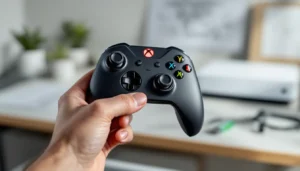
Rock Band has endured as one of the most entertaining music-rhythm games since its 2007 debut, and the Rock Band Xbox One experience remains a vibrant community in 2026. Whether you’re a returning veteran dusting off your wireless controllers or a newcomer curious about what makes rhythm gaming so addictive, this guide covers everything you need to know, from initial setup and game modes to competitive strategies and troubleshooting. The game delivers genuine multiplayer chaos, genuine musical progression, and a catalog that keeps expanding. Let’s break down how to get the most from it.
Table of Contents
ToggleKey Takeaways
- Rock Band Xbox One features a massive library of 2,500+ DLC songs with weekly updates, ensuring endless replayability and genre diversity for all music tastes.
- Proper calibration of audio and video latency is essential for accurate note detection; skipping this setup step will make even perfect timing feel off.
- Rock Band Xbox One supports up to four-player local and online multiplayer with collaborative band gameplay, making it uniquely accessible for both casual and competitive players.
- Mastering each instrument—guitar, bass, drums, and vocals—requires different techniques and muscle memory, from alternate strumming patterns to kick pedal precision.
- Controller quality matters significantly; invest in reliable wireless controllers, a stable drum kit with a responsive pedal, and a quality USB microphone for pitch detection.
- The game’s straightforward purchase model (buy songs, play, chase high scores) avoids battle passes and seasonal grinds, offering genuine depth without aggressive monetization.
What Is Rock Band for Xbox One?
Rock Band is a rhythm-action game where players simulate performing live music using guitar, bass, drum, and vocal controllers. Released for Xbox One in 2015, it revitalized the franchise with a massive DLC library, community-driven song updates, and cross-platform multiplayer support. Unlike competitors, Rock Band focuses on collaborative band experiences rather than pure competition, though ranked modes exist for those chasing leaderboard positions.
The core appeal is straightforward: match colored notes scrolling down the screen while staying in sync with your bandmates. It sounds simple, but execution demands timing precision, pattern recognition, and group coordination. You’re not just playing a game: you’re performing as a virtual band.
Rock Band Xbox One supports the standard controller-based setup (guitar, bass, drums, microphone) inherited from legacy peripherals or new reproductions. The game runs at 60 FPS on Xbox One S and X, delivering smooth note detection and responsive gameplay. Support remains active, with seasonal updates and DLC drops keeping the catalog fresh. As of 2026, the game has accumulated over 2,500 DLC songs, a staggering library that dwarfs most rhythm competitors.
Getting Started: Installation and Setup
Installation on Xbox One is straightforward: download the base game from the Microsoft Store, which runs about 20 GB. Once installed, launch and sign in with your Xbox Live account. The initial setup wizard walks you through calibration, critical for accurate note detection.
Calibration matters. Audio and video lag varies by TV model and audio setup. The game provides a calibration tool that plays sync clicks: hit them accurately so the game understands your display’s latency. Get this wrong, and even perfect timing feels off, frustrating and immersion-breaking.
Once calibrated, create or join a band. You’ll assign roles (lead guitar, bass, drums, vocals) and customize appearance. The game saves profiles per controller, so multiple players can jump in without resetting settings.
Essential Controller Requirements
Rock Band Xbox One supports both legacy Mad Catz controllers and modern reproductions. Here’s what you need to know:
Guitar Controller: Requires a wireless dongle (2.4 GHz) or USB connection. Must be fully charged or plugged in: the battery drains during extended sessions. Most legacy guitars from Rock Band 3 and 4 work with Xbox One via the compatibility adapter.
Bass Controller: Functionally identical to guitar but colored differently. Some players swap it for a second guitar in single-player modes.
Drum Kit: Four pads (red, yellow, blue, green) plus a kick pedal. Wireless or USB connection. Ensure the kick pedal is stable, loose setups cause false triggers. The rock band xbox one setup is flexible: you can practice with just one instrument and add others as you progress.
Microphone: USB connection. Quality varies: cheaper mics struggle with pitch detection. USB headset mics often work better than standalone karaoke mics.
Controller Pairing: Press the sync button on the controller within 20 seconds of pressing Xbox button + Menu on the console. The game will register the device. If a controller drops connection mid-session, re-sync before restarting the song.
Game Modes Explained
Rock Band Xbox One offers multiple play styles. Understanding each mode helps you choose what suits your mood and skill level.
Campaign Mode
Campaign (formerly “Career”) is the single-player/cooperative story mode. You assemble a band, name it, and tour across fictional venues from dive bars to massive stadiums. The progression is structured: win gigs, earn fans and money, unlock venues and setlists. It’s not a narrative-heavy experience, there’s no story cutscenes, but the structure provides satisfying progression for solo or co-op play.
Campaign uses a tiered difficulty system (Easy, Medium, Hard, Expert). Beating songs on higher difficulties unlocks cosmetics and unlocks later venues faster. You can switch difficulty between songs, so you’re not locked into a single challenge level for an entire playthrough.
The campaign supports up to four players locally. Pass the controller between songs or use separate controllers for simultaneous play. Local co-op is where Rock Band shines, the shared laughs and failures make it genuinely social in a way online matchmaking can’t replicate.
Quickplay and Custom Setlists
Quickplay lets you jump into any song without campaign structure. Perfect for casual sessions or warming up before ranked matches. You can play solo, with local co-op, or online.
Custom Setlists are a major feature. Create playlists of 5-20 songs in any order. Filter by genre, artist, or decade. Some players craft themed sets (“80s Rock Anthems,” “Punk Ragers”) for specific hangouts. Setlists save locally, so you can load your favorites instantly.
Randomized setlist mode exists too: the game picks songs for you, ensuring variety and preventing predictable patterns during multiplayer sessions.
Online Multiplayer and Band Mode
Online Multiplayer supports up to four players across the internet. Matchmaking is skill-based: you’ll generally face bands of comparable ability. Connection stability is crucial, lag in rhythm games is brutal. Fiber or wired ethernet connections perform significantly better than Wi-Fi. The game uses rollback netcode (updated in 2024), which minimizes perceived latency, but your connection quality still matters.
Band Mode is the primary online format. Four players (one per instrument) form a band and compete against other bands across multiple songs. Scores accumulate: the highest cumulative score wins. Individual performance metrics display in real-time, so weak links are obvious, create accountability.
There’s no ranking system punishment for losing online matches, but bragging rights exist in leaderboard rankings by band name and instrument. Some bands have maintained top-10 positions for years, grinding ranked sessions obsessively.
Mastering the Instruments
Progression in Rock Band requires understanding instrument mechanics. Each controller demands different techniques and muscle memory.
Vocal Performance Tips
Singing is the most accessible instrument for newcomers. You don’t need perfect pitch: the game detects phoneme (sound shape), not exact pitch frequency. A off-key singer can still hit notes if they match the vowel shape.
Techniques that work:
- Sustain control: Hold vowel sounds smoothly. Trembling or wavering causes pitch detection to drop. Imagine singing, not shouting.
- Phrase breaks: Between lyrics, drop volume briefly. The game detects silence and resets phrase detection, which prevents carry-over from a bad note.
- Tone matching: Listen to the original track. Attempting the original artist’s phrasing (rhythm, emphasis) helps the game lock onto your pitch.
- Microphone placement: Hold it 4-6 inches from your mouth at a 45-degree angle. Too close causes plosive distortion: too far loses signal.
On Expert difficulty, the game enforces stricter pitch windows. Miss the note and you’ll lose streak and points. Build streaks for multipliers (up to 4x on Expert with a 50+ note streak). Most expert singers maintain 80%+ accuracy with practice.
The hardest vocal songs are typically those with wide pitch ranges (“Through the Fire and Flames,” for instance, demands octave jumps). Range training outside Rock Band helps, sing to your car stereo, honestly, and push your comfortable bandwidth.
Guitar and Bass Techniques
Guitar is the most popular instrument. Success hinges on finger dexterity and pattern memorization. Notes fall into green, red, yellow, blue, and orange, tap the corresponding fret button while strumming. Chords occur when multiple notes play simultaneously: press all buttons at once and strum once.
Key mechanics:
- Strumming direction: Alternate up and down strums for speed. Rapid single-direction strokes (all down strokes) are slower and tiring. Training your alternate strumming muscle memory is essential for Hard and Expert.
- Hammer-ons and pull-offs: Some notes don’t require strums. Hit the fret button near a strum line without strumming, and the game registers a “hammer-on.” Pull-offs work the opposite way, release a held fret. Mastering these sequences adds speed and flow.
- Star Power (Overdrive): When your streak hits 20+ notes, a yellow bar appears. Tilt the controller up (or hold a button depending on controller) to activate Star Power, 10 seconds of 2x multiplier. Perfect for high-score chasing. Efficient Star Power use separates good players from great ones.
- Single-note vs. chord speed: Single-note passages demand fast, accurate strumming. Chords are slower but require precise multi-finger fret button pressing. Mix both seamlessly.
Bass uses identical mechanics but serves a supportive role. High scores matter less than consistency: bass errors disrupt the band’s sync meter. On Expert, bass parts are legitimately difficult, don’t underestimate the orange fret. Bass shredding (rapid alternate strumming on single notes) is the bass player’s flex moment.
Drumming Strategies
Drums demand rhythmic precision and hand-eye coordination. The kit has four pads (red, yellow, blue, green), a kick pedal, and optional hi-hat pedal for more advanced kits.
Beginners often struggle with kick pedal timing. The pedal registers on certain beats: miss them and your streak dies. Practice in Medium difficulty focusing only on kick patterns. Once you’re comfortable, layer in pad hits.
Advanced drumming:
- Kick pedal accuracy: Hit the pedal on the indicated beat. Late kicks lose accuracy: early kicks cause double-hits. Develop a feel for precise timing.
- Pad transitions: Move your hands efficiently. Red-yellow-blue-green patterns require smooth, economical motion. Waste motion drains stamina during 6+ minute songs.
- Double bass: Some songs feature rapid kick pedal hits (15-20 per second). This demands practice and a responsive pedal. Budget kick pedals struggle: upgrade if you’re serious.
- Hand-foot synchronization: Your hands and feet must work independently. Train by playing songs where kicks and pads don’t align. Separating limb control is the most difficult skill to develop.
Drummer stamina is real. Expert drummers finish tough songs exhausted. Condition yourself by playing longer setlists and progressively harder songs.
Difficulty Levels and Progression
Rock Band’s difficulty system is intentionally broad, accommodating everyone from button-mashers to peripheral-tossing perfectionists.
Choosing Your Difficulty
Easy: For absolute newcomers or when you want to relax. Three to four notes per second. Patterns are sparse. You’ll nail most songs without practice, but you won’t feel challenged either. Great for onboarding non-gamers to the rhythm concept.
Medium: Realistic difficulty. Seven to nine notes per second. Patterns introduce complexity without overwhelming. Most casual players find their home here. Beat Medium songs consistently before moving up.
Hard: 12-15 notes per second. Requires focus and practice. Streaks break if you slack. Not every song is tough on Hard, some are “Hard Medium,” while others are genuinely difficult. Expect to replay songs multiple times before mastering them.
Expert: 18+ notes per second, some up to 25. Requires genuine skill development. Patterns are intricate, demanding both finger dexterity and rhythmic intuition. Beating an Expert song for the first time is genuinely satisfying. Many players stay on Expert once they reach it, chasing high scores and leaderboard positions.
Don’t jump difficulties immediately. Spend 3-5 sessions on your current difficulty before progressing. Building muscle memory matters more than clearing songs quickly.
Advancing Through Ranks
Campaign mode gates progression by venue tiers. Beat gigs, unlock venues, eventually reach the massive stadium finale. This structure forces difficulty progression: you can’t skip to Expert songs immediately.
Custom rankings don’t exist outside campaign (no achievement levels or badges), but your band reputation grows through online multiplayer. Leaderboards track highest scores per song and overall band standing. Climbing rankings requires grinding high-difficulty setlists repeatedly, chasing perfect plays.
Some dedicated bands document seasonal rank progress in community Discord servers. The competition is genuine, especially in smaller player bases. A Grand Theft Auto Xbox player might dabble in Rock Band casually, but committed rhythm gamers treat it with competitive seriousness.
Customization and Personalization
Visual customization is Rock Band’s personality system. Your band’s appearance, instruments, and stage presence reflect playstyle and taste.
Creating Your Band Identity
At campaign start, you name your band and customize its logo (pre-made designs or imported images). Generic logos look lazy: invest in something memorable. Top bands sport custom logos reflecting their name or theme.
Character customization is extensive. Tattoos, clothing, hair, makeup, body shape, you’re building a virtual performer. Unlike some rhythm games, Rock Band prioritizes personality over realism. Absurd combinations are encouraged: some players rock neon suits and mohawks, others dress like their gaming heroes.
Stage presence extends to instruments and audio. You unlock guitar/bass skins, drum kit colors, and microphone skins through campaign progress and DLC purchases. Flashy instruments don’t improve performance, but psychological comfort, playing with YOUR guitar, matters surprisingly.
Unlocking Gear and Cosmetics
Campaign rewards: Beat gigs on progressively harder difficulties and unlock cosmetics. Unlock everything on Expert and you’ll have substantial wardrobe variety.
DLC purchases: Rock Band Store offers cosmetic bundles (instrument skins, character gear) alongside song packs. A single cosmetic bundle runs $2-5 USD. Monthly cosmetic rotations create FOMO (fear of missing out): limited-time items sell more copies. Some players drop $50+ monthly chasing exclusive cosmetics.
Achievement cosmetics: Specific in-game achievements (beating all songs on Expert, hitting 500+ consecutive notes) unlock exclusive cosmetics unavailable for purchase. These badges separate dedicated players from casuals: earning rare cosmetics signals commitment and skill.
Personal recommendation: focus on cosmetics that reflect YOUR band’s identity, not trends. Cosmetics are timeless if you love them: chasing trends wastes currency.
Multiplayer Strategies and Competitive Play
Online multiplayer separates casuals from competitive players. Success requires instrument mastery, band coordination, and mental resilience.
Building Team Chemistry
Role specialization: Each instrument contributes differently. The lead guitarist gets spotlight but also pressure, every note matters. The bassist provides foundation: missing kicks destroys the band’s sync meter. Drummer controls rhythm consistency. The vocalist either carries or drags the group.
Winning bands assign players to their strongest instruments. A naturally talented drummer shouldn’t be forced onto vocals just because no one else volunteers. Trust your team’s strengths.
Communication: Even without voice chat (though team Discord is standard), signal intentions. Agree on difficulty before matchmaking. Discuss setlist strategy, if one band member struggles with punk songs, ban them from the rotation if possible. Some competitive bands practice specific setlists before ranked sessions.
Consistency over heroics: Star Power hunting for personal high scores often costs band matches. Activating Star Power at the right moment (synchronized across two players) maximizes multiplier effects. Selfless play wins tournaments: highlight reels don’t.
Ranked Matches and Leaderboards
Matchmaking pairs bands of similar skill ratings. Win streaks increase rating: loss streaks decrease it. The algorithm isn’t perfect, occasionally you’ll face teams far above or below your level. Accept it and move on.
Leaderboards display top 500 bands by cumulative score or per-instrument rankings. Some leaderboard positions are genuinely unassailable: the grinding required is Herculean. Realistic goals are top 10% of your skill bracket, respectable without requiring 40+ hours weekly.
Seasonal resets: Every few months, leaderboards reset, giving everyone a fresh start. Some hardcore players immediately grind back to top positions: most enjoy the momentary equality.
Competitive Rock Band communities exist on Reddit (r/rockband), Discord servers (search “Rock Band competitive”), and fan sites. Joining active communities connects you with players at your skill level, organized tournaments, and strategy discussions. The social aspect often matters more than rankings, finding your people is why people play.
Song Selection and Setlist Management
Rock Band’s strength is its music library. With 2,500+ DLC tracks, discovery and curation matter.
Expanding Your Music Library
Seasons and DLC packs: New songs drop weekly or bi-weekly. Most recent additions are $2-3 per song or $5-6 per 3-song pack. There’s always fresh content, ensuring the game never feels stale.
Genre variety spans rock, alternative, indie, pop, metal, punk, country, and more. If you despise a genre, you can avoid it entirely. Most players have strong preferences, rock purists skip country months: pop fans embrace them enthusiastically.
Backward compatibility: Songs from Rock Band 3 and 4 export to Rock Band Xbox One (requires purchase of legacy games and export licenses, roughly $15). You’re not forced to rebuy the entire catalog, but many older songs still cost money.
Reading community recommendations before purchasing ensures you’re buying songs you’ll actually play. Some DLC packs are universally panned (poor hit detection, weird charts): others become classics. Check the Rock Band subreddit’s DLC reviews before committing dollars.
DLC Tracks and Licensing
Licensing complexity: Rock Band must license every song from publishers. Some songs expire and get delisted, unavailable for new purchases, unplayable for those without previous licenses. It’s frustrating but legally inevitable. Windows Central occasionally covers licensing updates when major songs rotate off.
Chart quality varies wildly. Official charts are created by human designers, not algorithms. Some are expertly crafted: others are clunky approximations. Community feedback influences future DLC quality. Charts that don’t match the original song’s rhythm or feel frustrate players.
Licensing agreements expire. If a band breaks up or disputes arise, their songs may be removed. This creates artificial scarcity: owning licensed digital music is temporary. The recent industry shift toward music streaming reflects this reality, though Rock Band still uses purchase-based DLC.
Expect to spend $20-50 monthly on DLC if you’re an active player. Casual players probably spend $0-5. Neither approach is wrong: it depends on your engagement level.
Troubleshooting Common Issues
Rock Band is remarkably stable, but issues happen. Here’s how to fix the most common problems.
Controller Connection Problems
Wireless controllers keep disconnecting: Recharge or replace batteries immediately. Low voltage causes spotty connections. Xbox controllers drain batteries 2-3x faster during Rock Band than regular gaming.
If recharging doesn’t fix it, re-sync the controller. Press the sync button on the controller and Xbox simultaneously. Wait for the Xbox light to flash and stabilize. This usually resolves connection drops.
Controller pairs but inputs aren’t detected: This indicates a calibration issue or controller hardware failure. Try recalibrating in the Rock Band menu (Settings > Calibration). If the controller still doesn’t register, try a different controller on the same instrument. If the second controller works, the first controller is faulty and needs replacement.
Multiple controllers interfering: If you’re using four wireless controllers simultaneously, interference can occur. This is rare but happens in heavily populated Wi-Fi areas. Workaround: wire one controller via USB while keeping others wireless. The wired controller prioritizes signal and reduces interference.
Audio Synchronization Fixes
Notes don’t match the song’s actual beats: This is a calibration error. Launch calibration from the main menu. The game plays clicks: hit the corresponding notes. Do this five times per direction (up/down strums for guitar, pads for drums). Accurate calibration is crucial.
If you consistently miss notes even though recalibrating, your TV’s audio/video latency might exceed the calibration range. High-input-lag TVs (common in older budget models) cause chronic desync. Test on a different display if possible.
Microphone sounds robotic or muffled: USB cable damage or port contamination. Swap USB ports. If that fails, try a different microphone to confirm it’s not a hardware issue.
Lag during online multiplayer: This is network latency. The game uses rollback netcode, but slow connections cause real desync. Switch to wired Ethernet if possible. If you’re on Wi-Fi, move closer to your router. Disable other bandwidth-heavy activities (streaming, downloads) during ranked sessions.
Talk to your ISP if latency persists. Some internet plans have inconsistent ping even though advertised speeds. Fiber connections are dramatically better than DSL or cable for gaming. This sounds obvious, but upgrading internet for a better experience is underrated. Pure Xbox often publishes network optimization guides for multiplayer titles.
Why Rock Band Xbox One Remains a Classic in 2026
In an era of live-service games and free-to-play monetization, Rock Band Xbox One operates on a refreshingly straightforward model: buy songs you love, play them with friends, chase high scores. No battle passes, no seasonal grinds, no FOMO mechanics beyond cosmetics.
The player base remains dedicated. Active communities organize tournaments, share setlist recommendations, and support newcomers. Some players have maintained top-10 leaderboard positions for years, a testament to the game’s longevity and depth.
Multiplayer accessibility sets it apart. Unlike competitive shooters or fighting games, Rock Band welcomes players of vastly different skill levels in the same session. Casual guitarists can play Medium while experts tackle Expert on drums. Everyone has fun, everyone contributes.
DLC sustainability is unmatched. 2,500+ songs mean you’ll never exhaust the catalog. Genre diversity ensures there’s something for everyone. The weekly update cycle keeps the community engaged and talking.
Compare this to Dragon’s Dogma 2 Xbox or other single-player experiences, once you’ve finished the main story, engagement drops precipitously. Rock Band has indefinite replay value.
The game’s persistence matters. When Rock Band 4 launched in 2015, skeptics bet it would fade. Yet it’s sustained updates, active players, and seasonal content through 2026. That’s uncommon for rhythm games, which typically peak and fade within 2-3 years. Rock Band defied that trajectory.
Perfectionists will grind Expert charts obsessively. Casual groups will fire it up for Friday night hangouts. Both experiences are equally valid and equally fun. That inclusivity is Rock Band’s greatest strength.
Conclusion
Rock Band Xbox One delivers what few games manage: depth for dedicated players and accessibility for casuals. Whether you’re chasing leaderboard supremacy or crashing a house party with four-player chaos, it serves both audiences brilliantly.
The learning curve is forgiving but mastery is challenging. You’ll struggle with your first Expert song, celebrate your first perfect 100%, and eventually obsess over shaving one missed note from a 200+ combo. That progression feels earned.
Setup is straightforward if you invest in decent controllers. Audio calibration is non-negotiable, ignore it at your peril. Once dialed in, the game rarely frustrates with technical issues: problems are usually user-side.
As for the music library, 2,500 DLC songs is an embarrassment of riches. You’ll find artists and genres you’d never discover otherwise. Some deep cuts become new favorites. Others become setlist staples even though weak charts.
Multiplayer coordination separates casual fun from competitive grind, but both are rewarding. Building a consistent band with friends you trust transforms the experience from “rhythm game” into “weekly ritual.”
Rock Band Xbox One isn’t flashy or trendy. It’s understated, reliable, and endlessly replayable. In a gaming landscape obsessed with battle passes and live-service monetization, that’s refreshing. If you’ve ever felt the urge to perform live music without the cost of real instruments or the commitment of a actual band, Rock Band answers that itch perfectly. Pick up a guitar controller, learn the basics, and discover why millions have poured thousands of hours into a game about playing air guitar. The community waiting for you is vibrant, welcoming, and ready to rock.